


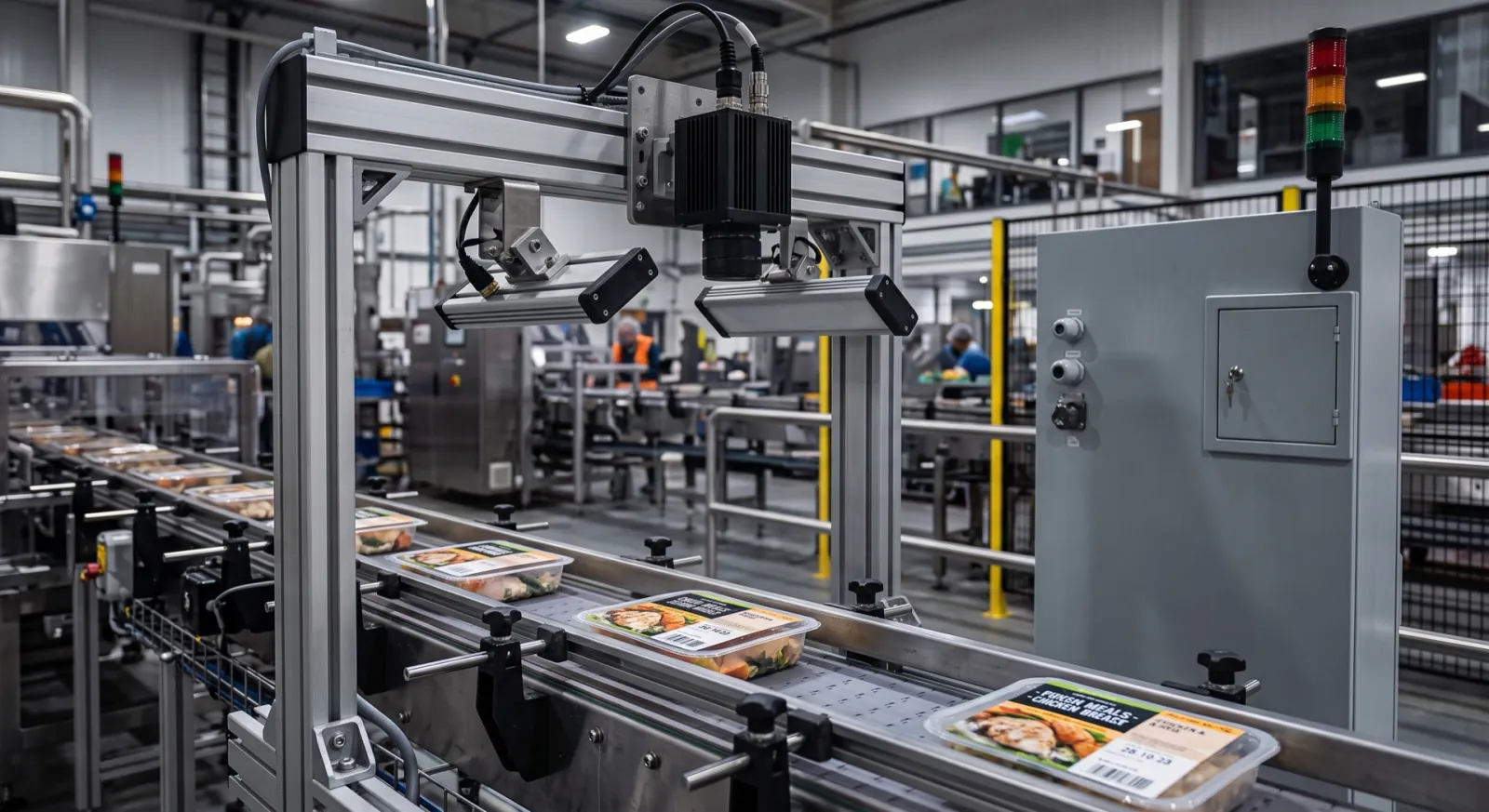
Label and code inspection system
Reads labels, barcodes, and date and lot codes on every pack and rejects mismatches.
Specs →Get started
×Tell us about the line. A person reads it and replies.
Or talk it through first:
30-minute Google Meet call, Monday to Friday, 9 am to 5 pm Pacific.
Need a full study of the line first?

Label inspection, fill level inspection, and barcode inspection on production lines, designed, built, and integrated with your PLCs.
The fault↓The fix
The pack carries the wrong label or allergen information.
Reads every label and rejects any that don't match the job.
Barcode reading →Barcodes, date codes, or lot codes are missing or unreadable.
Reads every code. Print-quality trends depend on the reader.
Barcode reading →Seals are open or damaged before packing.
Inspects visible seals and rejects bad packs.
Vision inspection →Caps are high, tilted, or missing, or fill is low.
Checks cap position and fill level on every container.
Vision inspection →Unit, case, and pallet serials or UDI codes don't match.
Reads every serial and sends results to your serialization software.
Traceability →Systems
We design, build, and install each system, including cameras, lighting, frame, reject, PLC wiring, and safety wiring. We choose cameras and software from leading vendors to fit your line.
Reads labels, barcodes, and date and lot codes on every pack and rejects mismatches.
Specs →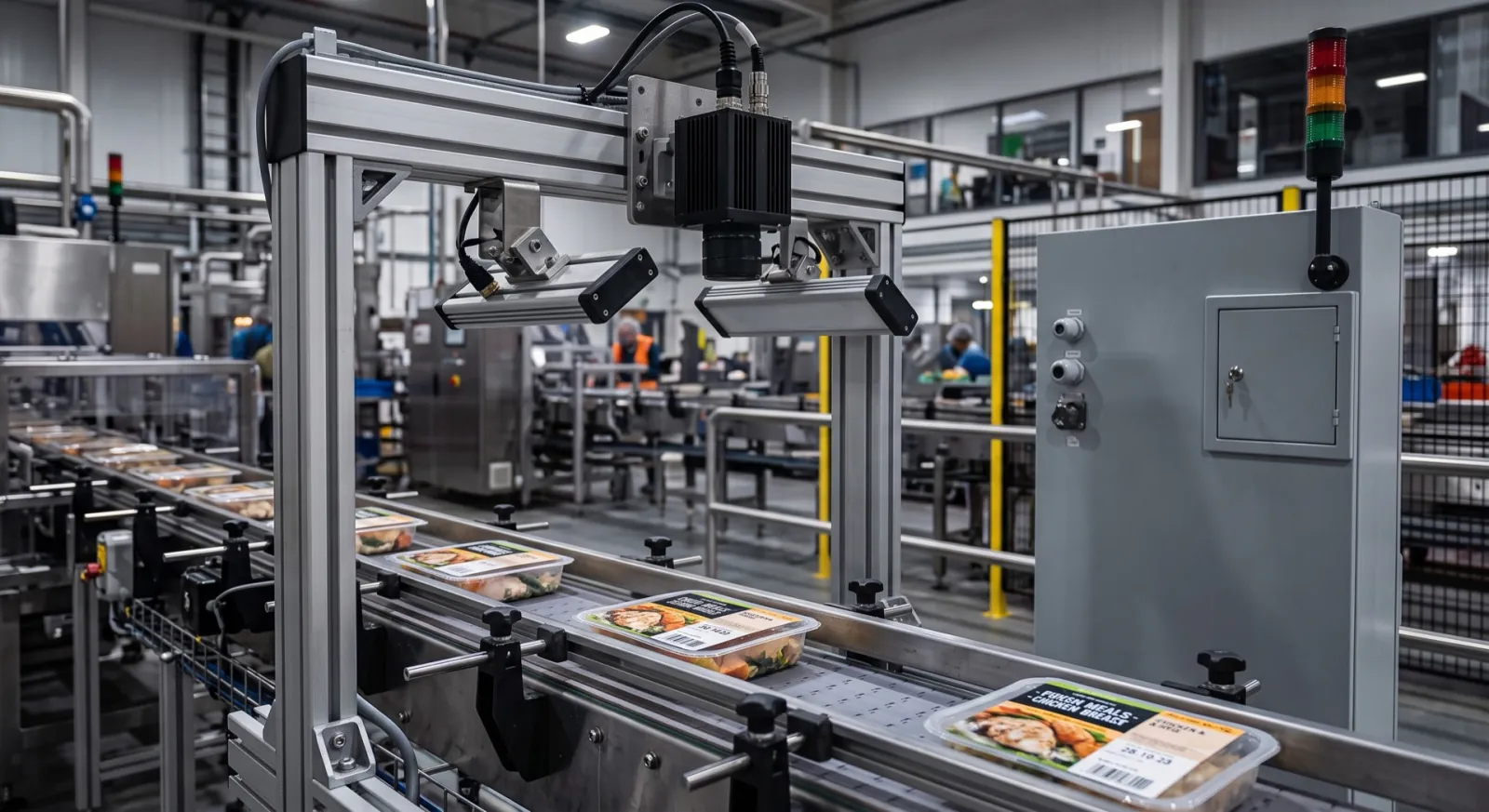
Reads codes and can trend print quality when the reader reports it. A formal ISO grade is a separate setup.
Specs →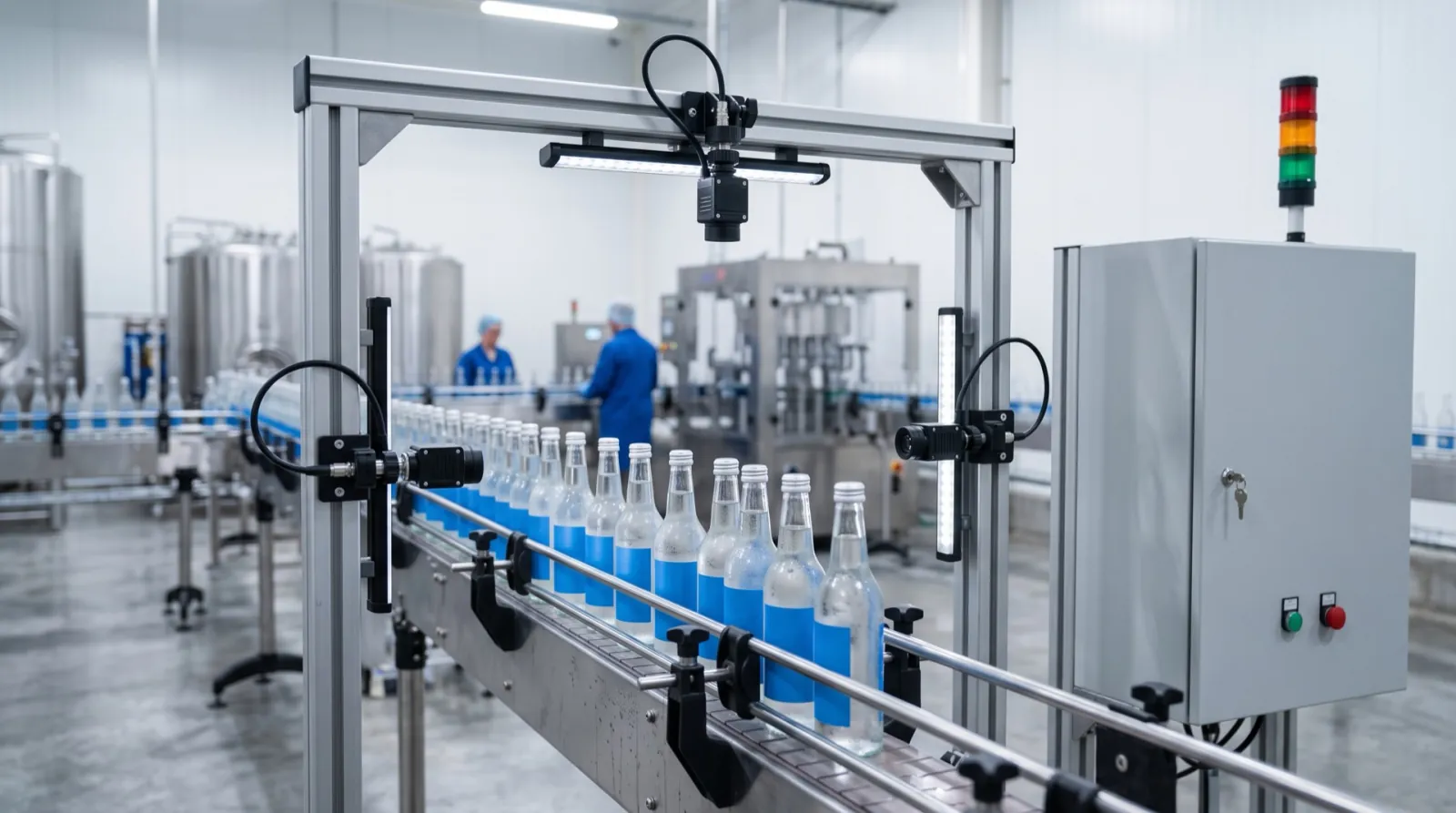
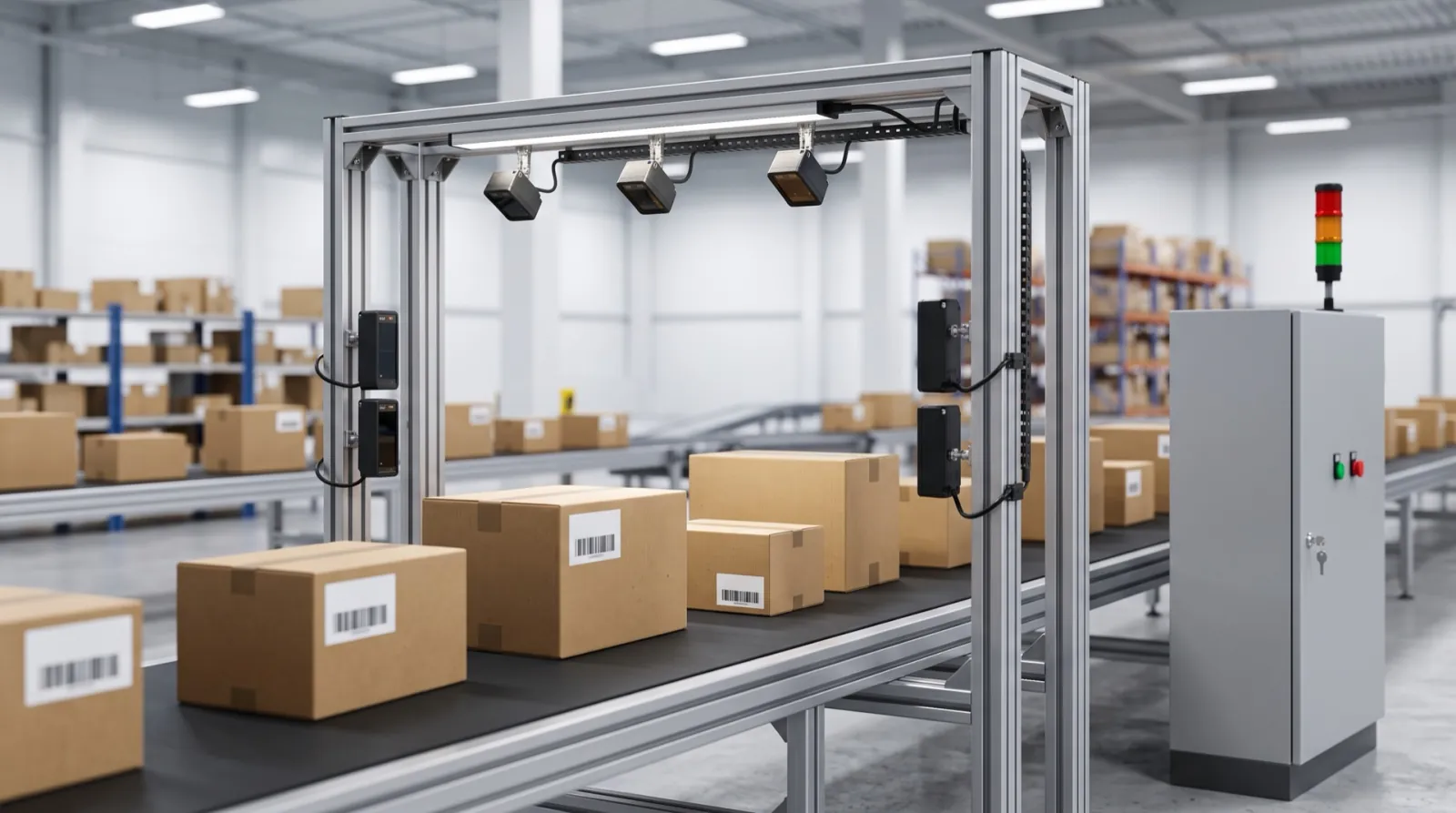
Every system connects to your PLC for rejects and line signals, and it can share data with robots.
Don't see your problem? We also design custom systems.
For one fault, see label inspection, fill level inspection, and barcode inspection, plus can seam inspection. We also upgrade cameras already on the line, on site from Carlsbad across San Diego County, for food packaging, beverage, pharmaceutical, and medical device lines.
By industry
We build each system around your product and line, for food production, beverage, pharmaceutical, medical device, and packaging lines. Choose your area, then pick the problem that sounds like yours. You'll see why it happens and how a machine vision system detects it.
Not sure which problem it is? Book an assessment and we'll help you find out.
From feasibility study to site acceptance
Send us samples of good and bad product, and we'll tell you in writing whether a machine vision system can reliably detect the defect or code error.
We design the system around your line and send a proposal with the scope, price, and schedule.
We build the system and test it with sample parts you send us before it ships.
We install the system on your line and run it with the reject turned off, so your team can review its decisions first.
After you sign off, we turn on the reject, train your operators, and provide documentation to support your IQ/OQ process.
Send us samples of good and bad product. You'll get a written answer before any proposal or price.
Book an assessmentBased in Carlsbad, on site at plants across North County San Diego, San Diego County and Southern California. See where we work.
Traceability
Our systems check that every lot and date code matches the job, save each reject with its image and reason, and send the data to your traceability, serialization, and quality software. When a problem turns up, you can find the affected lots instead of pulling everything.
